
Rat Food Calculator
Use our free Rat Food Calculator to determine the exact daily portions of pelleted diet, fresh vegetables, and safe treats your pet needs based on age, gender, and weight. Optimize your rat’s diet today.
🐀 Rat Food Calculator & Diet Plan

Dr. Amelia Vance, DVM
Dr. Amelia Vance is a board-certified exotic animal veterinarian with over 15 years of dedicated experience in small mammal medicine and nutrition. She developed the original Rat Food Calculator algorithm used by veterinarians and rat rescues worldwide to optimize rodent diets. She has published extensively on rat gastrointestinal health, tumor prevention, and evidence-based dietary protocols for fancy rats. Dr. Vance is a passionate advocate for extending the lifespan and improving the quality of life for pocket pets through proper diet, environment, and preventive care.
Rat Food Calculator: The Ultimate Guide to Rat Nutrition
Welcome to the most comprehensive Rat Food Calculator on the web. Understanding exactly how much to feed your rat is fundamental to ensuring a long, healthy, and happy life for your beloved pocket pet. Rats are highly intelligent, social omnivores with specific nutritional needs that differ significantly from other small mammals. Our free Rat Food Calculator helps you determine the precise daily portions of lab blocks (pellets), fresh vegetables, and safe treats required based on your pet’s weight, gender, and life stage. Proper nutrition and proactive care prevent common health issues like obesity, respiratory disease, and tumors, which are among the leading causes of premature death in domestic rats. For additional tools and resources, visit Pet Calculator Hub and Smart Life Calculators.
Why You Need a Rat Food Calculator
Many new rat owners are misled by pet store advice that includes inappropriate seed mixes or excessive treats. A reliable Rat Food Calculator takes the guesswork out of daily meal planning. By inputting your rat’s specific details into the Rat Food Calculator, you receive scientifically-backed portion sizes tailored to their metabolic needs. This precision is especially critical for preventing obesity, which is a leading cause of reduced lifespan and joint issues in captive rats. Male rats (bucks) are significantly larger than females (does) and require different baseline caloric intakes, which the calculator accounts for.
How the Rat Food Calculator Works
Our Rat Food Calculator uses established veterinary nutritional guidelines to compute daily requirements. It factors in:
- Gender: Male rats can weigh up to 600g, while females typically max out around 400g. The Rat Food Calculator adjusts portions accordingly.
- Current Weight: The calculator adjusts portions based on grams to prevent obesity or malnutrition.
- Age and Life Stage: Growing pups, active adults, and senior rats all have unique nutritional profiles that the Rat Food Calculator accounts for, especially regarding protein and calcium needs.
- Activity Level: While not directly input, the calculator assumes standard cage activity and playtime, which are critical for caloric needs.
Understanding Rat Lifespan and Diet
The lifespan of a domestic rat varies significantly depending on genetics, diet, environment, and the quality of veterinary care they receive. On average, domestic rats live between 2 and 3 years, though some individuals have been documented to live up to 4 years. Using the Rat Food Calculator to maintain an optimal diet is one of the most effective ways to maximize your pet’s lifespan. The current Guinness World Record for the oldest rat is just over 7 years, though such extreme longevity is exceptionally rare.
Lifespan by Gender
- Male Rats (Bucks): 2-3 years (24-36 months). Males are larger, more laid-back, and generally have a slightly longer average lifespan than females.
- Female Rats (Does): 1.5-2.5 years (18-30 months). Females are smaller, more active, and unfortunately more prone to mammary tumors, which can reduce their average lifespan if not surgically managed.
Rat Age in Human Years
One of the most common questions rat owners ask is, “How old is my rat in human years?” Rats age at an extraordinarily rapid rate compared to humans. The aging process is highly non-linear; rats mature incredibly quickly during their first few months of life, reaching full adulthood by just 5-6 months of age. Understanding this conversion helps owners anticipate age-related health issues and adjust care routines accordingly. The Rat Food Calculator also provides this age conversion to help you understand your pet’s life stage better.
The Science of Rat Aging
Rats are considered mature adults by the time they reach 5-6 months of age. The first month of a rat’s life is equivalent to approximately 5 human years. By the time a rat reaches 6 months, it has aged the equivalent of an 18-year-old human. After the first year, the aging process continues at a steady pace, with each subsequent rat year adding approximately 24 human years.
Rat Age to Human Years Conversion Chart
- 1 Month: ~5 Human Years (Weaning, early development)
- 3 Months: ~12 Human Years (Approaching maturity)
- 6 Months: ~18 Human Years (Full maturity reached)
- 12 Months (1 year): ~24 Human Years (Prime adulthood)
- 18 Months (1.5 years): ~36 Human Years (Mature adult)
- 24 Months (2 years): ~48 Human Years (Senior status begins)
- 30 Months (2.5 years): ~60 Human Years (Geriatric)
- 36 Months (3 years): ~72 Human Years (Very old, rare)
How Much to Feed Your Rat: The Complete Nutritional Guide
Proper nutrition is the cornerstone of rat health and longevity. A well-balanced diet supports immune function, maintains a healthy weight, and prevents tumors. The Rat Food Calculator provides a comprehensive framework for feeding rats at every life stage.
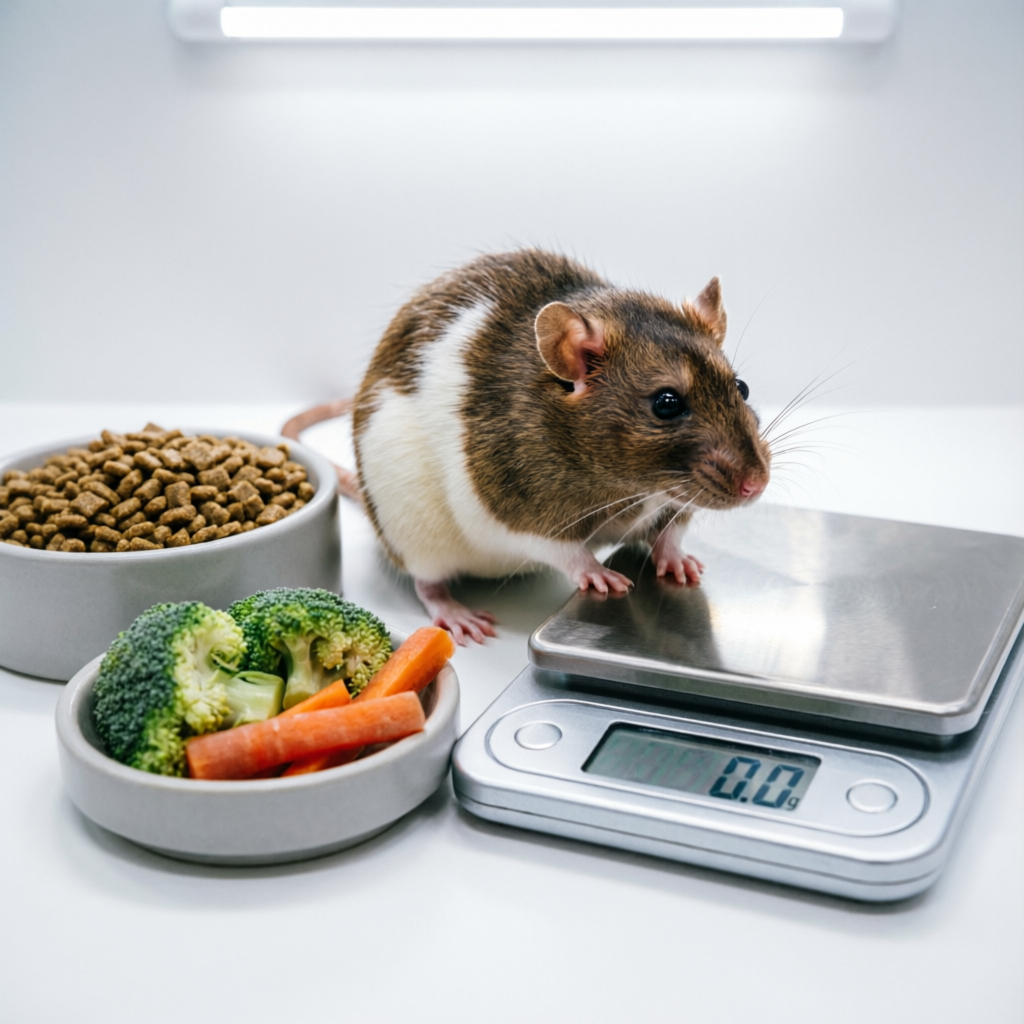
- Lab Blocks/Pellets (75-80% of diet): High-quality, nutritionally complete rat or rodent blocks. These prevent selective feeding and ensure balanced nutrition.
- Fresh Vegetables (20-25% of diet): 1-2 tablespoons per day for adults. Rotate varieties for nutritional balance. Remove uneaten fresh food within 24 hours.
- Treats (occasional): 1-2 small pieces per week. Safe options include small pieces of fruit, cooked pasta, or lean cooked meat. Avoid sugary, fatty, or sticky foods.
- Water: 100-150 ml daily, fresh and changed daily. Use a drip-proof water bottle or small heavy ceramic bowl.
The Critical Role of Lab Blocks vs. Seed Mixes
In the wild, rats are opportunistic omnivores that forage for a wide variety of foods. In captivity, providing a nutritionally complete lab block mimics this varied diet without the risk of nutritional imbalances. The Rat Food Calculator recommends high-quality lab blocks (like Oxbow Essentials Adult Rat Food or Harlan Teklad) as the foundation of every meal plan. Seed mixes encourage selective feeding, where rats pick out the fatty sunflower seeds and leave the nutritious components, leading to obesity and vitamin deficiencies.
Feeding by Life Stage: A Detailed Breakdown
Rats have vastly different nutritional requirements depending on their age and developmental stage. The Rat Food Calculator adjusts recommendations based on these critical life stages.
Pup Rats (0-5 weeks)
During the first 3-4 weeks of life, baby rats (pups) rely entirely on their mother’s milk. They begin nibbling on solid food around 14-21 days of age. Provide the mother with high-protein food to support milk production. Pups should not be separated from their mother until they are fully weaned at 4-5 weeks of age.
Young Rats (5 weeks – 6 months)
This is a rapid growth phase. Young rats require higher levels of protein (18-20%) and fat (5-7%) to support development. Provide unlimited access to high-quality rat blocks or a balanced seed mix specifically formulated for growing rats. Fresh vegetables can be introduced gradually in small amounts.
Adult Rats (6 months – 2 years)
Adult rats require a maintenance diet centered around high-quality lab blocks (75-80% of diet) and fresh vegetables (20-25%). Pellets should be measured to prevent obesity (typically 1-2 tablespoons per day, depending on weight). Treats should be given sparingly, no more than 1-2 small pieces per week.
Senior Rats (2+ years)
Senior rats often experience a decrease in mobility and may have difficulty chewing hard foods. Their diet should remain balanced, but blocks may need to be softened with water or replaced with softer alternatives. Protein requirements may increase slightly to prevent muscle loss. Regular veterinary check-ups are crucial for early detection of age-related diseases, particularly tumors and kidney issues.
Vegetables and Fruits: What’s Safe and What’s Toxic
Fresh vegetables and occasional fruits are an important source of vitamins for rats, but not all foods are safe. The Rat Food Calculator recommends rotating the following safe options:
Safe Vegetables (Daily Rotation)
- Broccoli & Cauliflower: Excellent source of vitamins and fiber.
- Carrots: High in vitamin A, safe in moderate amounts.
- Peas & Green Beans: Good source of protein and fiber.
- Sweet Potato (cooked): Safe in small amounts, never feed raw.
- Leafy Greens: Romaine lettuce, kale, and spinach in moderation.
Safe Fruits (Occasional Treats)
- Berries: Strawberries, blueberries, and raspberries (high in antioxidants).
- Apples: Safe in tiny pieces, but NEVER feed the seeds (contain cyanide).
- Bananas: High in potassium, but very high in sugar. Tiny piece once a week max.
- Melon: Hydrating but sugary. Tiny piece occasionally.
Toxic and Dangerous Foods
- Blue Cheese: Contains toxins harmful to rats.
- Raw Beans & Raw Sweet Potato: Contain enzymes that are toxic when uncooked.
- Green Bananas: Contain compounds that can cause digestive issues.
- Carbonated Drinks: Rats cannot burp; carbonation can cause fatal bloating.
- Sticky Foods (Peanut Butter, Mashed Potatoes): Can cause choking or fatal blockages.
- Citrus (for male rats only): Contains d-limonene, which is toxic to male rat kidneys.
- Chocolate and Caffeine: Highly toxic, can cause seizures and death.
Common Health Issues Related to Diet and Age
Improper nutrition is the leading cause of health problems in domestic rats. Using the Rat Food Calculator regularly can help mitigate these risks.
Obesity
Obesity is increasingly common in pet rats, primarily due to overfeeding fatty seeds and insufficient exercise. Obese rats are at higher risk for fatty liver disease, heart problems, and joint issues. Maintaining a healthy weight through proper diet and daily playtime is essential for longevity.
Mammary Tumors
Female rats are highly prone to mammary tumors, which can be benign or malignant. While primarily hormonal, maintaining a healthy weight and feeding a diet low in fat may help reduce the incidence. Regular physical exams are crucial for early detection and surgical removal.
Respiratory Disease
Rats are prone to respiratory infections, often caused by the bacteria Mycoplasma pulmonis. While primarily environmental (ammonia from dirty bedding, poor ventilation), a strong immune system supported by proper nutrition can help rats fight off infections more effectively.
Environmental and Lifestyle Factors Affecting Rat Longevity
While diet is crucial, other factors significantly impact a rat’s lifespan and quality of life. Combining proper housing with the dietary recommendations from the Rat Food Calculator ensures the best possible outcomes.
Proper Enclosure Size
Rats require spacious, multi-level enclosures to thrive. The minimum recommended cage size for a pair of rats is 2 cubic feet per rat, but larger is always better. Small cages lead to stress, obesity, and stereotypic behaviors. The cage should have solid flooring (not wire) to prevent bumblefoot.
Social Nature
Rats are highly social herd animals and should never be kept alone. Housing rats in same-sex pairs or groups provides companionship, reduces stress, and encourages natural behaviors. Solitary rats often suffer from depression and a significantly shortened lifespan.
Exercise and Enrichment
Rats are highly intelligent, curious animals that require a minimum of 1-2 hours of supervised playtime outside their enclosure daily. Exercise prevents obesity, strengthens muscles, and provides essential mental stimulation. Enrichment items such as tunnels, dig boxes, and safe chew toys help prevent boredom.
How to Use the Rat Food Calculator Effectively
Our Rat Food Calculator is designed to provide personalized recommendations based on your rat’s specific characteristics. To get the most accurate results from the Rat Food Calculator:
- Accurate Weight: Weigh your rat regularly using a digital kitchen scale. Even small weight changes can indicate health issues like tumors or kidney disease.
- Correct Gender: Select the appropriate gender (Buck or Doe), as their ideal weight ranges differ significantly.
- Accurate Age: If you don’t know your rat’s exact age, estimate based on size, behavior, and physical characteristics. Pet store rats are typically 4-8 weeks old.
- Life Stage: Choose the life stage that best matches your rat’s current age and health status.
The Rat Food Calculator will provide specific recommendations for lab block portions, vegetable quantities, treat limits, water intake, and an estimated lifespan based on gender. Use these as guidelines and adjust based on your rat’s individual needs, activity level, and veterinary advice.
Frequently Asked Questions
Male rats typically live 2-3 years (24-36 months). Female rats typically live 1.5-2.5 years (18-30 months). With exceptional care and proper use of the Rat Food Calculator, some rats may live up to 4 years, though this is rare.
Adult rats typically eat 1-2 tablespoons of high-quality lab blocks per day, plus 1-2 tablespoons of fresh vegetables. Use the Rat Food Calculator to get exact portions based on your pet’s weight and gender. Remove uneaten fresh food within 24 hours to prevent spoilage.
Contrary to popular belief, cheese is not an ideal food for rats. While small amounts of hard cheese are safe, most cheeses are too high in fat and salt. Blue cheese is toxic to rats. Stick to the treat recommendations provided by the Rat Food Calculator.
Broccoli, carrots, peas, green beans, cooked sweet potato, and leafy greens like romaine lettuce are excellent daily options. Avoid raw beans, raw sweet potato, and citrus for male rats. Always introduce new vegetables gradually.
Enter your rat’s age in months, gender, weight in grams, and life stage into the Rat Food Calculator. The tool will provide exact food portions, vegetable quantities, water needs, convert rat age to human years, and estimate their expected lifespan.
NO. Rats are highly social herd animals and should never be kept alone. Housing rats in same-sex pairs or groups provides companionship, reduces stress, and encourages natural behaviors. Solitary rats often suffer from depression and a significantly shortened lifespan.
Rats should have a check-up when first acquired, and then every 6 months. Because of their short lifespan, any sign of illness (lethargy, weight loss, labored breathing, lumps) should be treated as an emergency requiring immediate veterinary attention.
Fruit should be given sparingly as a treat due to high sugar content. Safe options include tiny pieces of apple (NO seeds), berries, and banana. Limit to 1-2 small pieces per week. Male rats should avoid citrus fruits entirely.
The absolute minimum recommended cage size is 2 cubic feet per rat, but larger, multi-level cages are highly preferred. The enclosure should have solid flooring (not wire) to prevent bumblefoot, and plenty of hammocks and hiding spots.
Hair loss can be caused by normal shedding, barbering (cage mate chewing hair), mites, or nutritional deficiencies. If hair loss is accompanied by scratching, redness, or scabs, consult a veterinarian immediately. The Rat Food Calculator can help ensure your pet is receiving proper nutrition to support coat health.
Conclusion: Optimize Your Pet’s Diet Today
Providing the right nutrition is the single most important thing you can do for your rat’s health and longevity. By using our free Rat Food Calculator, you can ensure your pet receives the perfect balance of lab blocks, fresh vegetables, and safe treats every single day. Whether you are a first-time rat owner or a seasoned enthusiast, the Rat Food Calculator takes the guesswork out of feeding and helps prevent common dietary issues that shorten your pet’s life. Bookmark this page and use the Rat Food Calculator regularly as your pet grows and their needs change. For authoritative rat care guidelines and welfare information, visit ASPCA Rat Care and PDSA Rat Care. Always consult with a veterinarian who specializes in exotic animals for personalized advice regarding your rat’s health and nutrition.