
Parrot Calorie Calculator
Use our free Parrot Calorie Calculator to determine your bird’s exact daily caloric needs, pellet portions, and fresh food requirements based on species, weight, and activity level.
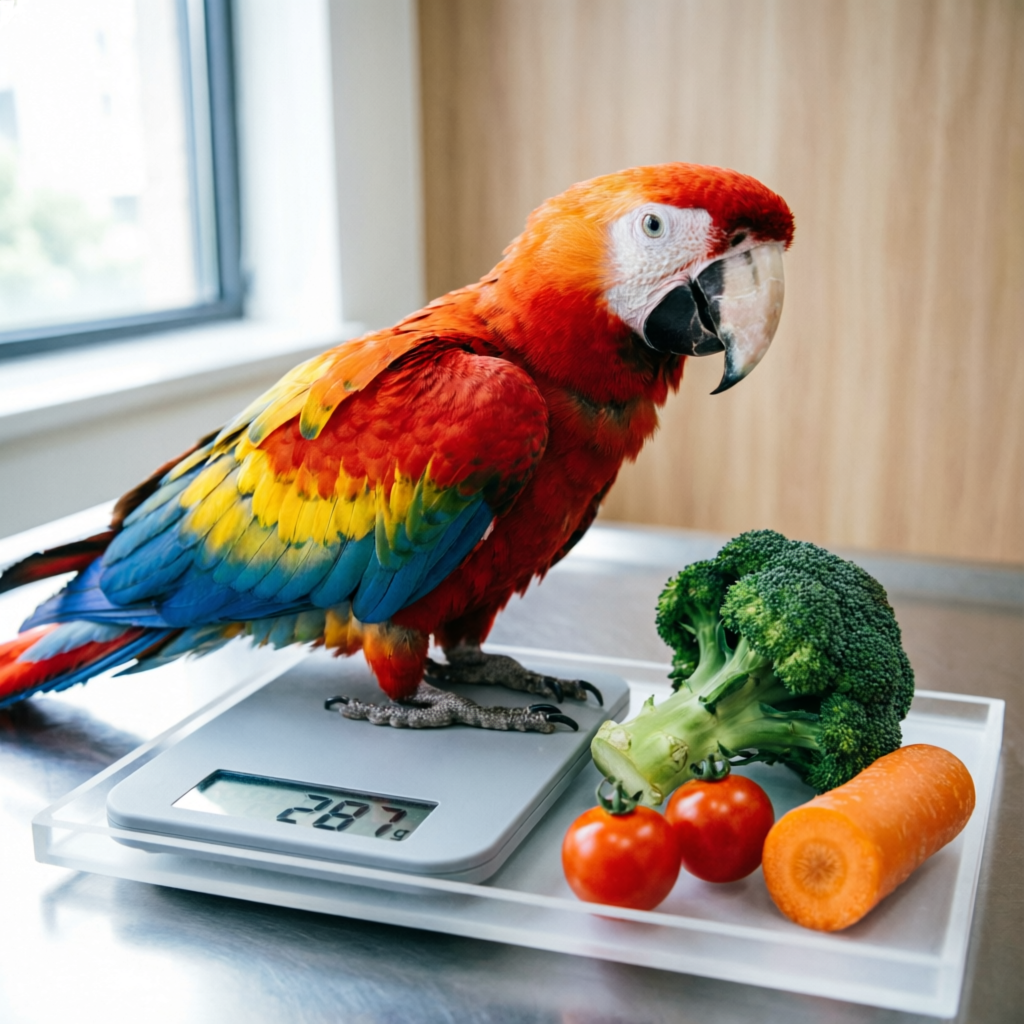
Parrot Calorie Calculator & Energy Plan

Dr. Amelia Vance, DVM
Dr. Amelia Vance is a board-certified avian veterinarian with over 15 years of dedicated experience in parrot medicine, behavior, and nutrition. She developed the original Parrot Calorie Calculator algorithm used by avian vets and rescues worldwide to combat the epidemic of seed-only diets and metabolic diseases in companion birds. She has published extensively on avian gastrointestinal health, fatty liver disease prevention, and evidence-based dietary protocols. Dr. Vance is a passionate advocate for extending the lifespan and improving the quality of life for parrots through proper diet, environmental enrichment, and preventive care.
Parrot Calorie Calculator: The Ultimate Guide to Avian Energy Needs
Welcome to the most comprehensive Parrot Calorie Calculator on the web. Understanding exactly how many calories your parrot needs daily is fundamental to ensuring a long, healthy, and vibrant life for your beloved companion. For decades, the pet industry mistakenly promoted seed-only diets, leading to an epidemic of malnutrition, obesity, and fatty liver disease in companion birds. Our free Parrot Calorie Calculator helps you break away from outdated practices by providing precise, species-specific daily caloric requirements and portion sizes based on your bird’s weight, activity level, and life stage. Proper caloric management is the single most effective way to prevent life-threatening conditions and ensure your parrot thrives. For additional tools and resources, visit Pet Calculator Hub and Smart Life Calculators.
Why You Need a Parrot Calorie Calculator
Many new bird owners are misled by colorful packaging on seed mixes or outdated advice from non-specialist sources. A reliable Parrot Calorie Calculator takes the guesswork out of daily meal planning. By inputting your parrot’s specific details, you receive scientifically-backed caloric targets tailored to their unique metabolic rate. This precision is especially critical because a Budgie’s caloric needs per gram of body weight are vastly different from a Macaw’s, and overfeeding high-fat seeds to a sedentary indoor bird is a fast track to metabolic disease.
How the Parrot Calorie Calculator Works
Our Parrot Calorie Calculator uses established avian veterinary nutritional guidelines, specifically the Resting Energy Requirement (RER) and Maintenance Energy Requirement (MER) formulas, to compute daily caloric needs. It factors in:
- Species-Specific Metabolism: The calculator applies different basal metabolic rate (BMR) multipliers for a Budgie versus an African Grey, reflecting their natural foraging behaviors and caloric burn.
- Current Weight: The Parrot Calorie Calculator compares your bird’s weight against species-specific ideal ranges to detect underweight or overweight conditions, automatically adjusting portion recommendations to encourage safe weight management.
- Activity Level: Highly active birds that fly frequently burn significantly more calories than cage-bound pets. The calculator adjusts the MER multiplier accordingly.
- Life Stage: Growing juveniles require up to 2x their maintenance calories, while senior birds may need slightly fewer calories but more easily digestible nutrients.
The 70/20/10 Rule of Parrot Nutrition
The Parrot Calorie Calculator distributes your bird’s daily caloric needs according to the gold standard of avian nutrition, widely endorsed by the Association of Avian Veterinarians (AAV):
- 70% from High-Quality Pellets: Formulated to provide complete, balanced nutrition without the excess fat of seeds. Pellets prevent selective feeding and ensure consistent intake of essential vitamins and minerals. (~3.5 kcal per gram)
- 20% from Fresh Vegetables & Fruits: Dark leafy greens (kale, collard greens, spinach), orange vegetables (carrots, sweet potato), and occasional low-sugar fruits (berries, apple slices). These provide essential phytonutrients and hydration. (~0.3 kcal per gram)
- 10% from Seeds, Nuts, & Treats: Should be used strictly as training rewards, foraging enrichment, or occasional snacks. For larger parrots like Macaws, a single almond or walnut is a treat, not a meal. (~5.0 kcal per gram)
Species-Specific Caloric Needs
While the 70/20/10 rule applies broadly, the Parrot Calorie Calculator fine-tunes recommendations based on the unique metabolic rates of different species:
Budgerigars (Budgies)
Small but highly active, Budgies have fast metabolisms and require roughly 10-15 kcal per day. They require a high-quality small-particle pellet. Fresh veggies should be finely chopped. Due to their size, even a single extra seed per day can lead to obesity over time. Monitor weight closely.
Cockatiels
Prone to fatty liver disease and vitamin A deficiency if fed improperly. Cockatiels require roughly 25-35 kcal per day and thrive on a strict pellet foundation. Offer chopped dark leafy greens and orange vegetables daily. Limit sunflower seeds strictly to training sessions.
Conures (Green-Cheeked, Sun, etc.)
Highly active and playful, Conures burn significant calories, requiring roughly 40-60 kcal per day. They benefit from a varied diet of pellets, chopped veggies, and occasional healthy carbohydrates like cooked quinoa or brown rice. Sun Conures, in particular, need adequate vitamin A for feather health.
African Greys
Notorious for being picky eaters and highly prone to hypocalcemia (low blood calcium) and vitamin A deficiency. African Greys require roughly 80-120 kcal per day from a strict pellet diet supplemented with calcium-rich greens (collard greens, broccoli) and minimal high-fat nuts. Consistency is key; avoid changing their diet abruptly.
Macaws
Large, powerful birds with higher absolute caloric needs (150-250+ kcal/day), but still susceptible to obesity if fed high-fat diets. Macaws require large-particle pellets, generous portions of chopped vegetables, and can handle a slightly higher nut intake (e.g., 1-2 almonds or walnuts per day) due to their size, but these must be counted within the 10% treat allowance.
Toxic Foods: What to Never Feed Your Parrot
Avian digestive and metabolic systems are highly sensitive. The Parrot Calorie Calculator emphasizes safe feeding, but you must also strictly avoid these toxic foods:
- Avocado: Contains persin, which is highly toxic to birds, causing respiratory distress and sudden heart failure.
- Chocolate and Caffeine: Contains theobromine and caffeine, which cause cardiac arrhythmias, hyperactivity, and seizures.
- Onions and Garlic: Contain compounds that destroy red blood cells, leading to hemolytic anemia.
- Fruit Pits and Apple Seeds: Contain trace amounts of cyanide. Always remove seeds and pits before offering fruit.
- High-Salt or High-Sugar Human Foods: Birds’ kidneys cannot process high sodium, leading to dehydration, kidney failure, and obesity.
- Raw Beans: Contain hemagglutinin, which is toxic to birds. Beans must be thoroughly cooked before offering.
Transitioning Your Parrot to a Healthy Diet
If your parrot is currently on a seed-only diet, do not switch to pellets overnight. Birds are neophobic (afraid of new things) and may starve themselves rather than eat unfamiliar food. The Parrot Calorie Calculator recommends a gradual transition:
- Week 1-2: Offer pellets in a separate dish alongside their regular seeds. Do not remove seeds yet.
- Week 3-4: Begin mixing a small amount of pellets into the seed mix. Offer fresh, brightly colored vegetables (like red bell pepper) to attract curiosity.
- Week 5-6: Gradually increase the pellet ratio while decreasing the seed ratio. Offer seeds only in a foraging toy or as a training reward.
- Week 7+: Achieve the 70/20/10 ratio. Monitor weight weekly to ensure the bird is eating enough and not losing weight dangerously.
Note: If your bird refuses to eat pellets after several weeks, consult an avian veterinarian. They may recommend a specific brand or texture, or rule out underlying illness causing inappetence.
Environmental and Lifestyle Factors Affecting Avian Health
While diet is crucial, other factors significantly impact a parrot’s health and longevity. Combining proper nutrition with the following best practices ensures the best possible outcomes:
- Foraging Enrichment: In the wild, parrots spend up to 80% of their day foraging. Hide pellets and veggies in foraging toys, shredable paper, or cardboard boxes to stimulate natural behaviors and prevent boredom.
- Air Quality: Birds have highly efficient respiratory systems, making them extremely sensitive to airborne toxins. Never use Teflon/non-stick cookware, aerosol sprays, scented candles, or smoke near your bird.
- Sleep: Parrots require 10-12 hours of uninterrupted, dark, quiet sleep every night. Covering the cage or using a dedicated sleep cage is highly recommended to prevent hormonal frustration and sleep deprivation.
- UV Lighting: If your bird does not have access to safe, direct sunlight (through an open window, as glass blocks UVB), consider an avian-safe full-spectrum UVB light to aid in calcium metabolism and Vitamin D3 synthesis.
How to Use the Parrot Calorie Calculator Effectively
Our Parrot Calorie Calculator is designed to provide personalized recommendations based on your bird’s specific characteristics. To get the most accurate results:
- Accurate Weight: Weigh your parrot weekly using a digital gram scale. Sudden weight loss is often the first sign of illness in birds, as they instinctively hide symptoms.
- Correct Species: Select the exact species or closest match, as metabolic rates vary wildly between a Budgie and a Macaw.
- Honest Activity Level: Be realistic about how much flight time your bird gets. Overestimating activity can lead to overfeeding and obesity.
Frequently Asked Questions
It varies wildly by species and weight. A Budgie needs roughly 10-15 kcal/day, a Cockatiel 25-35 kcal/day, a Conure 40-60 kcal/day, an African Grey 80-120 kcal/day, and a Macaw 150-250+ kcal/day. Use the Parrot Calorie Calculator to get the exact number for your specific pet.
No. An all-seed diet is highly dangerous and is the leading cause of fatty liver disease and hypovitaminosis A in pet birds. Seeds should make up no more than 10% of the diet, with high-quality pellets forming the 70% foundation.
Feel the keel bone (breastbone). If it feels sharply prominent like a knife edge, the bird is underweight. If you cannot feel the bone at all due to a thick layer of fat, the bird is overweight. The Parrot Calorie Calculator also flags weight anomalies based on species averages.
Dark leafy greens (kale, collard greens, spinach), orange vegetables (carrots, sweet potato), and broccoli are excellent. Avoid avocado, onions, and garlic, which are highly toxic.
If your parrot is eating a high-quality pellet diet and fresh vegetables, additional vitamin supplements are usually unnecessary and can even lead to hypervitaminosis (vitamin toxicity). Always consult an avian vet before adding supplements.
Enter your parrot’s species, weight in grams, age in years, activity level, and life stage. The tool will provide exact daily calories, food portions in grams, water needs, and offer species-specific dietary tips.
Conclusion: Optimize Your Avian Companion’s Diet Today
Providing the right nutrition is the single most important thing you can do for your parrot’s health and longevity. By using our free Parrot Calorie Calculator, you can ensure your pet receives the perfect balance of pellets, fresh vegetables, and safe treats every single day. Whether you are a first-time Budgie owner or a seasoned Macaw enthusiast, the Parrot Calorie Calculator takes the guesswork out of feeding and helps prevent common dietary issues that shorten your bird’s life. Bookmark this page and use the Parrot Calorie Calculator regularly as your pet grows and their needs change. For authoritative avian care guidelines and welfare information, visit ASPCA Bird Care and PDSA Bird Care. Always consult with a veterinarian who specializes in avian medicine for personalized advice regarding your parrot’s health and nutrition.