
Rabbit Age & Feeding Calculator
Discover your rabbit’s true age in human years and determine daily hay, pellet, and vegetable portions based on age, weight, and breed. The ultimate bunny nutrition and age conversion guide.
Rabbit Feeding & Age Calculator
Rabbit Age in Human Years & Feeding Calculator: The Ultimate Guide
Understanding your rabbit’s true age and nutritional needs is fundamental to providing a long, healthy, and happy life for your beloved companion. Our comprehensive Rabbit Age in Human Years and Feeding Calculator helps you determine exactly how old your bunny is in human terms, alongside calculating the precise daily portions of hay, pellets, and fresh vegetables required based on weight, breed size, and life stage. Proper nutrition prevents life-threatening conditions such as gastrointestinal (GI) stasis, dental disease, and obesity, which are among the leading causes of premature death in domestic rabbits. For additional tools and resources, visit Pet Calculator Hub and Smart Life Calculators.
Understanding Rabbit Age in Human Years
One of the most common questions rabbit owners ask is, “How old is my rabbit in human years?” Unlike dogs and cats, rabbits age at a different rate depending on their breed size and life stage. The aging process is not linear; rabbits mature very rapidly during their first two years of life, after which the aging process slows down considerably. Understanding this conversion helps owners anticipate age-related health issues and adjust care routines accordingly.
The Science of Rabbit Aging
Rabbits are considered mature adults by the time they reach one year of age. The first year of a rabbit’s life is equivalent to approximately 20 human years. This rapid maturation means that a six-month-old rabbit is essentially a teenager in human terms. By the time a rabbit reaches its second birthday, it has aged the equivalent of 30 human years. After the second year, the aging process slows, with each subsequent rabbit year adding approximately 4 to 6 human years, depending on the breed size.
Smaller breeds, such as Netherland Dwarfs and Holland Lops, tend to live longer than larger breeds like Flemish Giants. Consequently, smaller breeds age slightly slower after the initial two-year period, adding about 4 human years per rabbit year, while larger breeds may add 6 human years per rabbit year. Medium-sized breeds fall in the middle, adding approximately 5 human years per rabbit year after age two.
Rabbit Age to Human Years Conversion Chart
Here is a detailed breakdown of how rabbit years translate to human years across different breed sizes:
- 1 Rabbit Year: 20 Human Years (All breeds reach full maturity)
- 2 Rabbit Years: 30 Human Years (Peak physical condition)
- 3 Rabbit Years: 34-36 Human Years (Small: 34, Medium: 35, Large: 36)
- 4 Rabbit Years: 38-42 Human Years
- 5 Rabbit Years: 42-48 Human Years
- 6 Rabbit Years: 46-54 Human Years (Senior status begins)
- 7 Rabbit Years: 50-60 Human Years
- 8 Rabbit Years: 54-66 Human Years
- 10 Rabbit Years: 62-78 Human Years (Geriatric)
Senior rabbits, typically those over 6 years of age (equivalent to 50+ human years), require more frequent veterinary check-ups, specialized diets, and careful monitoring for age-related conditions such as arthritis, cataracts, and kidney disease.
How Much to Feed Your Rabbit: The Complete Nutritional Guide
Proper nutrition is the cornerstone of rabbit health. A well-balanced diet supports digestive health, maintains dental wear, and prevents obesity. The following guidelines provide a comprehensive framework for feeding rabbits at every life stage.
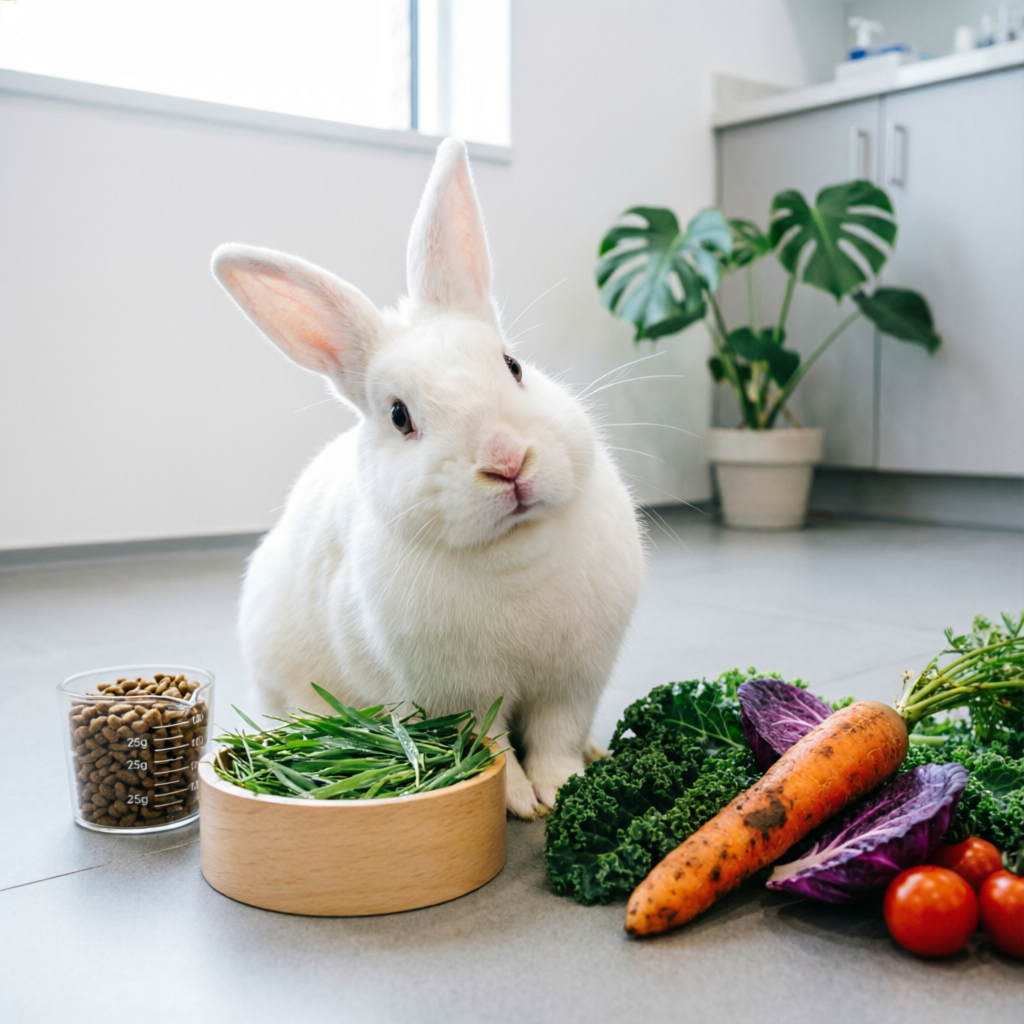
- Hay (unlimited): Provide fresh hay 24/7 — a pile as large as your rabbit’s body daily. Hay should constitute 80-90% of the diet.
- Pellets: 1-2 tablespoons per kg of body weight for adults. Avoid muesli mixes; choose uniform, high-fiber pellets.
- Leafy Greens: 1-2 packed cups per kg of body weight daily. Rotate varieties for nutritional balance.
- Treats (fruit/root veg): 1-2 teaspoons per kg, maximum 2-3 times per week. High sugar content requires strict limitation.
- Water: 50-150 ml per kg daily, fresh and changed daily. Both bowls and bottles are acceptable.
The Critical Role of Hay in Rabbit Nutrition
Hay is not merely a component of a rabbit’s diet; it is the absolute foundation. Rabbits have a unique digestive system that requires a constant intake of fiber to maintain gut motility. The gastrointestinal tract of a rabbit is designed to process large amounts of fibrous material, and without it, the digestive system can slow down or stop completely, leading to a life-threatening condition known as gastrointestinal (GI) stasis.
Types of Hay
Timothy Hay: The gold standard for adult rabbits. It provides the perfect balance of fiber, protein, and calcium. Its coarse texture helps wear down continuously growing teeth.
Orchard Grass Hay: A softer alternative to timothy, often preferred by rabbits with sensitive mouths or those who are picky eaters. It has slightly lower protein content but remains an excellent fiber source.
Oat Hay: Contains more seed heads and is slightly sweeter, making it a good option for encouraging hay consumption in reluctant eaters. However, it should be fed in moderation due to higher calorie content.
Alfalfa Hay: High in calcium and protein, alfalfa is essential for baby rabbits (under 6 months) and pregnant or nursing does. However, it should be strictly limited or avoided in adult rabbits, as excessive calcium can lead to bladder sludge and kidney stones.
Feeding by Life Stage: A Detailed Breakdown
Rabbits have vastly different nutritional requirements depending on their age and developmental stage. Understanding these differences is crucial for preventing nutritional deficiencies and excesses.
Baby Rabbits (0-6 months)
During the first six months of life, rabbits are in a rapid growth phase. They require high levels of protein and calcium to support bone and muscle development. Baby rabbits should have unlimited access to alfalfa hay and alfalfa-based pellets. Fresh water must always be available. Vegetables should not be introduced until the rabbit is at least 12 weeks old, and even then, they should be introduced one at a time in very small quantities to monitor for digestive upset. Fruits should be completely avoided during this stage.
Young Rabbits (6-12 months)
This is a transitional period. At six months, owners should begin gradually transitioning their rabbit from alfalfa hay to timothy hay. This transition should occur over a period of 7-10 days to prevent digestive upset. Pellet portions should also be reduced to adult levels. By 7-8 months, small amounts of fresh vegetables can be introduced, starting with one type at a time. This is also the ideal time to spay or neuter your rabbit, which significantly reduces the risk of reproductive cancers and improves behavior.
Adult Rabbits (1-5 years)
Adult rabbits require a diet centered around unlimited timothy hay, measured pellets, and a variety of fresh leafy greens. Pellets should be limited to 1-2 tablespoons per kilogram of body weight to prevent obesity. Fresh vegetables should make up about 10-15% of the diet. Treats, including fruits and carrots, should be given sparingly, no more than 1-2 teaspoons per kilogram of body weight, 2-3 times per week. Regular exercise is essential to maintain a healthy weight and mental stimulation.
Senior Rabbits (6+ years)
Senior rabbits often experience a decrease in mobility and may have difficulty grooming themselves or reaching their food and water. Their diet should remain high in fiber, but pellet portions may need to be adjusted based on weight changes. Some senior rabbits may benefit from senior-specific pellets that are easier to chew and digest. Joint supplements, such as glucosamine, may be recommended by a veterinarian. Regular veterinary check-ups every six months are crucial for early detection of age-related diseases.
Vegetables and Fruits: What’s Safe and What’s Toxic
Fresh vegetables are an important source of vitamins and minerals for rabbits, but not all vegetables are safe. Leafy greens should form the bulk of the vegetable portion of the diet.
Safe Vegetables (Daily Rotation)
- Romaine Lettuce: High in water content and fiber, excellent for hydration.
- Red and Green Leaf Lettuce: Nutritious alternatives to iceberg lettuce.
- Cilantro and Parsley: Rich in vitamins A and K, but feed in moderation due to strong flavors.
- Dandelion Greens: Excellent source of calcium and vitamins, but limit due to high calcium content.
- Basil and Mint: Safe in small amounts, provide variety and enrichment.
- Bok Choy and Watercress: Nutrient-dense but should be rotated to avoid calcium buildup.
Vegetables to Feed in Moderation
- Kale and Spinach: High in oxalates and calcium, which can contribute to bladder sludge if fed in excess. Limit to 1-2 times per week.
- Carrots and Carrot Tops: Carrot roots are high in sugar and should be treated as an occasional treat. Carrot tops are safe and nutritious.
- Broccoli and Cauliflower: Can cause gas and bloating in some rabbits. Introduce slowly and monitor for digestive issues.
Toxic and Dangerous Foods
Certain foods are highly toxic to rabbits and must be strictly avoided:
- Iceberg Lettuce: Contains lactucarium, which can be harmful in large quantities, and offers little nutritional value.
- Potatoes and Potato Tops: Contain solanine, which is toxic to rabbits.
- Beans and Peas: Can cause severe digestive upset and bloating.
- Onions, Garlic, and Chives: Can cause hemolytic anemia.
- Rhubarb: Contains oxalic acid, which is toxic to rabbits.
- Avocado: Contains persin, which is highly toxic to many animals, including rabbits.
- Chocolate, Candy, and Processed Foods: Rabbits cannot digest sugar and processed ingredients; these can be fatal.
Understanding Pellets: Quality Over Quantity
Pellets should supplement, not replace, hay and fresh vegetables. When choosing pellets, look for brands that are high in fiber (at least 18-20%), moderate in protein (12-14%), and low in calcium (less than 1%). Avoid pellets that contain seeds, nuts, dried fruits, or colorful pieces, often marketed as “muesli” mixes. These mixes encourage selective feeding, where rabbits pick out the unhealthy, sugary components and leave the nutritious pellets, leading to nutritional imbalances and dental problems. Uniform, plain pellets ensure that rabbits receive consistent nutrition with every bite.
Hydration: The Importance of Fresh Water
Rabbits require constant access to fresh, clean water. An average-sized rabbit drinks approximately 50-150 ml of water per kilogram of body weight daily. Water intake increases with higher fiber consumption, hot weather, and during lactation. Both water bowls and sipper bottles are acceptable, though many rabbits prefer bowls as they allow for more natural drinking postures. Water should be changed daily, and containers should be cleaned regularly to prevent bacterial growth. Dehydration can quickly lead to GI stasis, making water availability a critical component of rabbit care.
Common Health Issues Related to Diet and Age
Improper nutrition is the leading cause of health problems in domestic rabbits. Understanding these conditions can help owners prevent them through proper diet and care.
Gastrointestinal (GI) Stasis
GI stasis is a potentially fatal condition where the normal movement of the digestive tract slows down or stops completely. Symptoms include reduced or absent fecal pellets, loss of appetite, lethargy, and a hunched posture. Causes include low-fiber diets, stress, pain, and dehydration. Immediate veterinary intervention is required, often involving fluid therapy, pain medication, and syringe feeding of critical care formulas.
Dental Disease
Rabbit teeth grow continuously throughout their lives, approximately 2-3 mm per week. A diet high in abrasive fiber, primarily from hay, is essential for wearing down teeth evenly. Malocclusion, where teeth do not align properly, can lead to overgrowth, sharp spurs, and painful abscesses. Symptoms include drooling, difficulty eating, weight loss, and facial swelling. Regular dental check-ups are crucial, and severely overgrown teeth may require trimming under anesthesia.
Obesity
Obesity is increasingly common in pet rabbits, primarily due to overfeeding pellets and treats, combined with insufficient exercise. Obese rabbits are at higher risk for GI stasis, fatty liver disease, and pododermatitis (sore hocks). Maintaining a healthy weight through proper diet and daily exercise is essential for longevity.
Urinary Tract Issues
Excessive calcium in the diet, particularly from alfalfa hay and certain vegetables, can lead to hypercalciuria, where excess calcium is excreted in the urine, resulting in thick, sludge-like urine or bladder stones. Symptoms include straining to urinate, blood in the urine, and lethargy. Switching to a timothy-based diet and limiting high-calcium foods can prevent these issues.
Environmental and Lifestyle Factors Affecting Rabbit Longevity
While diet is crucial, other factors significantly impact a rabbit’s lifespan and quality of life.
Exercise and Enrichment
Rabbits are active animals that require daily exercise to maintain physical and mental health. A minimum of 3-4 hours of free-roaming time outside their enclosure is recommended. Exercise prevents obesity, strengthens muscles and bones, and provides mental stimulation. Enrichment items such as chew toys, tunnels, and puzzle feeders help prevent boredom and destructive behaviors.
Housing and Socialization
Rabbits should never be kept in small cages permanently. They require spacious enclosures that allow them to stretch, hop, and stand on their hind legs. Rabbits are highly social animals and thrive in pairs or groups. Keeping a single rabbit can lead to loneliness and depression. Proper socialization with humans and other rabbits is essential for psychological well-being.
Veterinary Care
Rabbits are prey animals and instinctively hide signs of illness. By the time symptoms are visible, the condition may be advanced. Regular check-ups with an exotic animal veterinarian, at least annually for adults and bi-annually for seniors, are crucial for early detection and treatment of health issues. Vaccinations against Rabbit Hemorrhagic Disease (RHDV2) are recommended in many areas.
How to Use the Rabbit Age and Feeding Calculator Effectively
Our calculator is designed to provide personalized recommendations based on your rabbit’s specific characteristics. To get the most accurate results:
- Accurate Weight: Weigh your rabbit regularly using a digital scale. Even small weight changes can indicate health issues.
- Correct Breed Size: Select the appropriate size category. If unsure, consult your veterinarian or breed standards.
- Accurate Age: If you don’t know your rabbit’s exact age, estimate based on dental wear, behavior, and physical characteristics.
- Life Stage: Choose the life stage that best matches your rabbit’s current age and health status.
The calculator will provide specific recommendations for hay type, pellet portions, vegetable quantities, water intake, and treat limits. Use these as guidelines and adjust based on your rabbit’s individual needs, activity level, and veterinary advice.
Frequently Asked Questions
Unlimited — a pile roughly the size of their body every day. Hay should be 80-90% of diet. Fresh hay must be available 24/7 to maintain digestive health and dental wear.
No — carrots are high in sugar and should be treated as an occasional treat only (1 small piece 2-3x/week). Focus on leafy greens for daily vegetable intake.
Romaine lettuce, red leaf lettuce, cilantro, parsley, dandelion greens, basil, mint, and bok choy are excellent daily options. Avoid iceberg lettuce, potatoes, beans, onions, and rhubarb.
Enter your rabbit’s weight, breed size, age, and life stage. The calculator will provide exact pellet tablespoons, greens cups, water needs, and convert rabbit age to human years.
Begin transitioning at 6 months of age. Mix alfalfa and timothy hay, gradually increasing the timothy portion over 7-10 days to prevent digestive upset.
Adult rabbits should have annual check-ups. Senior rabbits (6+ years) should be seen every 6 months. Immediate vet attention is required for any signs of illness, as rabbits hide symptoms well.
Fruit should be given sparingly as a treat due to high sugar content. Safe options include small pieces of apple (no seeds), banana, berries, and melon. Limit to 1-2 teaspoons per kg, 2-3 times per week.
Loss of appetite is a medical emergency in rabbits. It can indicate GI stasis, dental problems, or other serious conditions. Contact an exotic veterinarian immediately if your rabbit stops eating for more than 12 hours.
While rabbits can live alone, they are social animals and thrive in pairs or groups. A bonded pair provides companionship, reduces stress, and encourages natural behaviors. If keeping a single rabbit, ensure plenty of human interaction and enrichment.
With proper diet, housing, and veterinary care, domestic rabbits typically live 8-12 years. Some rabbits have been known to live into their teens. Smaller breeds generally live longer than larger breeds.
For authoritative rabbit nutrition guidelines and care information, visit House Rabbit Society and AVMA Rabbit Care. Always consult with a veterinarian who specializes in exotic animals for personalized advice regarding your rabbit’s health and nutrition.